Three places in Iceland are on UNESCO's World Heritage List: Þingvellir, inscribed in 2004, Surtsey in 2008 and Vatnajökull National Park in 2019. UNESCO keeps other lists besides, of documents, landscapes and living customs, and a network of cities. Iceland has a place in each.
Of the three, Þingvellir is the one listed for what people made there. The Alþingi, the open-air assembly of the whole country, met in its rift valley every year from about 930 until 1798. It has a piece of its own.
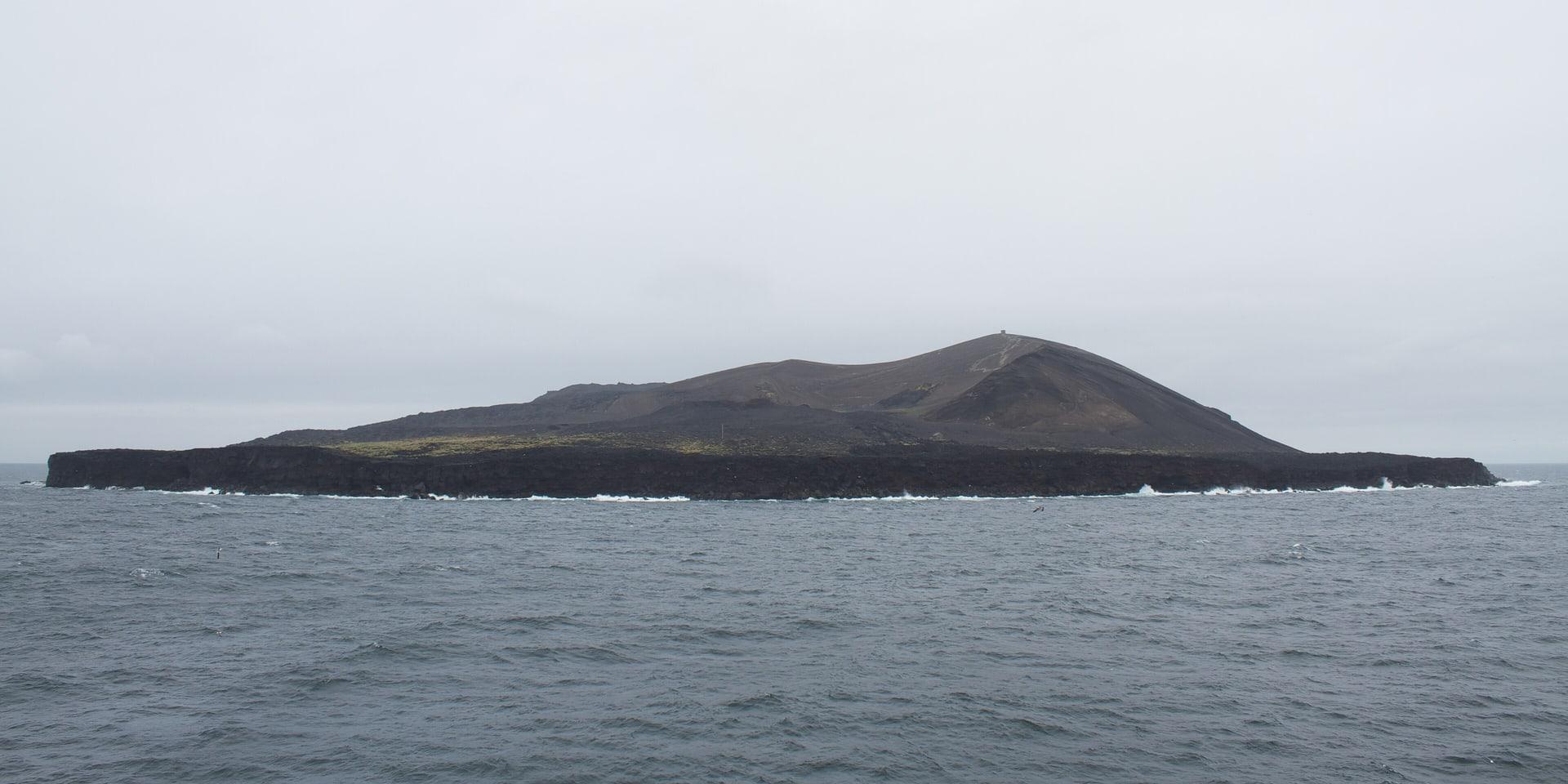
Surtsey began as an eruption under the sea, first seen at the surface on 14 November 1963, about 32 km off the south coast. The island was protected in 1965, while it was still erupting, and the eruptions went on until 1967. UNESCO lists it for what has happened on it since. Scientists have studied it from 1964 and watched life arrive on new land: seeds carried by the sea, then moulds, bacteria and fungi, then plants, birds and invertebrates, undisturbed by people. No one may land without a permit from the Nature Conservation Agency.
Vatnajökull National Park is much the largest of the three. Its listing takes in the whole park and two protected areas beside it, under the subtitle "Dynamic Nature of Fire and Ice". What it recognises is volcanoes and ice working on each other: UNESCO counts ten central volcanoes there, eight of them under the ice cap, and describes the floods that break out at the edge of the glacier when one of them erupts beneath it.
A country also keeps a tentative list, of the places it means to nominate. Iceland's holds six entries. Five went in on 7 February 2011: Breiðafjörður, the shallow bay between Snæfellsnes and the Westfjords, with some 3,000 islands, islets and skerries; Mývatn and the river Laxá; the turf house tradition, at fourteen farms and churches; and Þingvellir twice more, once for its nature and once as one of nine Viking sites in six countries put forward together. The sixth, added on 15 April 2013, is the Torfajökull volcanic system and the Fjallabak Nature Reserve in the south-central highlands.
The Memory of the World Register lists documents, and Iceland has two entries on it. The first, registered in 2009 on a nomination by Denmark and Iceland together, is the Arnamagnæan Manuscript Collection: nearly 3,000 manuscripts and documents gathered by the Icelandic scholar Árni Magnússon, the oldest from the twelfth century, with many sagas among them. He left it to the University of Copenhagen when he died in 1730, and it is now divided between the two countries. In Reykjavík, the Árni Magnússon Institute shows manuscripts in World in Words, an exhibition in its building, Edda. The second entry, registered in 2013, is the census that Árni and Páll Vídalín took for the Danish king in 1702 and 1703. It counted 50,366 people.
Reykjavík joined UNESCO's network of Creative Cities as a City of Literature in 2011, and UNESCO's page on the city names the same manuscripts.
Two of UNESCO's Global Geoparks are in Iceland: areas where geology of international importance is protected, taught and made to serve the people who live there. Katla Geopark, the country's first, takes its name from Katla, the volcano under the glacier Mýrdalsjökull. Reykjanes Geopark covers four municipalities on the Reykjanes peninsula, where the Mid-Atlantic Ridge comes ashore and two of the earth's plates move apart.
On 27 September 2025 Snæfellsnes became the country's first biosphere reserve, an area that undertakes to keep its ecosystems whole while improving the lives of the people in it. Snæfellsjökull National Park is its core.
The intangible heritage list records living customs, and Iceland is on it twice. In 2021 the tradition of the Nordic clinker boat, a small open wooden boat of overlapping planks, was inscribed for Denmark, Finland, Iceland, Norway and Sweden together. On 11 December 2025 came the first entry there that is Iceland's alone: its swimming-pool culture.
What the entry recognises is a habit. Iceland's heated outdoor pools are run by each community for its own people, and in a cold climate people of every age go to them to swim, exercise, rest or talk. Parents bring their babies, children learn the rules and customs there, and the hot tubs, in UNESCO's words, "have become informal debating parlours".
The pools have held opera as well. In October 2026 Reykjavík Opera Days floated a soprano across several of them in The Floating Diva, a piece by the Dutch artist Victorine Pasman: two attendants guided her over the water while she sang arias in a dress made of umbrellas. Árbæjarlaug Pool in Reykjavík and Alftanes Swimming Pool in Garðabær were two of them, and both are public pools like any other. A short history of Icelandic opera opens with her on the water at Álftanes.